Posts tonen met het label Health. Alle posts tonen

vrijdag 25 april 2014

This Little Weed is one of the Most Useful Medicines on the Planet

not weed weed
There are two major types of plantain in BC, Canada: Lance and Broadleaf. Generally, all 200-plus varieties of plantain yield the same results. It grows especially well in poor, rocky soil (such as driveways) and is often seen alongside dandelion. More often than not, you will see plantain growing in gravel pits and construction sites as nature seeks to regenerate the soil. Introduced to North America in the 1600s, it was once called “White Man’s Foot” by the Native Americans who witnessed that where the Europeans tread and disrupted the soil, plantain sprung up.
Plantain has often been the go-to remedy for hikers plagued by mosquitos. Because it draws toxins from the body with its astringent nature, plantain may be crushed (or chewed) and placed as a poultice directly over the site of bee stings, bug bites, acne, slivers, glass splinters, or rashes. Bandage the area and allow the plantain to work its magic for 4-12 hours. Plantain may also be used to create a balm for emergency kits, or an infusion used as a skin or general wash. It is also a notable, soothing remedy for hemorrhoids.
Plantain is renowned for its healing effect on the digestive system. This is especially useful for anyone who has been damaged by antibiotics, anti-inflammatory or pain medications, food allergies, or Celiac disease. Both leaves and seeds specifically target the digestive system for healing. The leaves may be steeped as tea, added to soups, or dried with a sauce similar to kale chips. The seeds – a type of psyllium – can be ground or soaked for bulk mucilage or absorbable fibre, which, consumed before meals, may help with weight loss.
Because plantain is a gentle expectorant and high in silica, an infusion can be helpful for lung problems, coughs, and colds.
Plantain is almost a panacea for the human body, treating everything from all menstrual difficulties, all digestive issues, to nearly all skin complaints, and even arthritis. Add to salads, chew to ease thirst, or enjoy in stir fries. This versatile wild vegetable will keep you in good health for years to come!

Resources:
- Prescription for Herbal Healing: 2nd Edition – Phyllis A. Balch, CNC
- Hygieia: A Woman’s Herbal – Jeannine Parvati
- Healing Secrets of the Native Americans – Porter Shimer
- The New Age Herbalist – Richard Mabey
About The Author
Jess Smith is a healer and raw wildcrafter living in the Fraser Valley, BC Canada. A lifelong student and advocate of herbal medicine, she grew up foraging the forests of BC. She runs a complementary healing practice, and, with her toddler, she enjoys teaching others about the wild abundance outside our doors.www.RedHawkHealing.com
Thanks to Project.Nsearch
Source: http://higherperspective.com/2014/01/little-weed-one-useful-medicines-planet.html?utm_source=HP

maandag 31 maart 2014

The Shocking Story of How Aspartame Became Legal


Did you know that Aspartame was banned by the FDA twice? How is this product legal now?

The bittersweet argument over whether Aspartame is safe or not has been going on for a long time. On one side we have medical evidence that suggests we should avoid using it and on the other side we lean on the FDA’s approval that suggests it is safe. Since generally that seems to be the factor that many continue to hold trust based upon, I thought we could look into the Aspartame story to find out how it came to be accepted as safe by the FDA. You would think that something so widely used and so well accepted would have quite the pristine story leading to its acceptance. I imagine one will discover otherwise after reading this post.

It all starts in the mid 1960′s with a company called G.D. Searle. One of their chemists accidentally creates aspartame while trying to create a cure for stomach ulcers. Searle decides to put aspartame through a testing process which eventually leads to its approval by the FDA. Not long after, serious health effects begin to arise and G.D. Searle comes under fire for their testing practices. It is revealed that the testing process of Aspartame was among the worst the investigators had ever seen and that in fact the product was unsafe for use. Aspartame triggers the first criminal investigation of a manufacturer put into place by the FDA in 1977. By 1980 the FDA bans aspartame from use after having 3 independent scientists study the sweetener. It was determined that one main health effects was that it had a high chance of inducing brain tumors. At this point it was clear that aspartame was not fit to be used in foods and banned is where it stayed, but not for long.
Early in 1981 Searle Chairman Donald Rumsfeld (who is a former Secretary of Defense.. surprise surprise) vowed to “call in his markers,” to get it approved. January 21, 1981, the day after Ronald Reagan’s inauguration, Searle took the steps to re-apply aspartame’s approval for use by the FDA. Ronald Reagans’ new FDA commissioner Arthur Hayes Hull, Jr., appointed a 5-person Scientific Commission to review the board of inquiry’s decision. It did not take long for the panel to decide 3-2 in favor of maintaining the ban of aspartame. Hull then decided to appoint a 6th member to the board, which created a tie in the voting, 3-3. Hull then decided to personally break the tie and approve aspartame for use. Hull later left the FDA under allegations of impropriety, served briefly as Provost at New York Medical College, and then took a position with Burston-Marsteller. Burstone-Marstella is the chief public relations firm for both Monsanto and GD Searle. Since that time he has never spoken publicly about aspartame.

It is clear to this point that if anything the safety of aspartame is incredibly shaky.  It has already been through a process of being banned and without the illegitimate un-banning of the product, it would not be being used today. Makes you wonder how much corruption and money was involved with names like Rumsfeld, Reagan and Hull involved so heavily. In 1985, Monsanto decides to purchase the aspartame patent from G.D. Searle. Remember that Arthur Hull now had the connection to Monsanto. Monsanto did not seem too concerned with the past challenges and ugly image aspartame had based on its past. I personally find this comical as Monsanto’s products are banned in many countries and of all companies to buy the product they seem to fit best as they are champions of producing incredibly unsafe and untested products and making sure they stay in the market place.
Since then, aspartame has been under a lot of attack by scientists, doctors, chemists and consumers about it’s safety and neurotoxic properties. Piles of comprehensive studies have been completed that show aspartame is a cause for over 90 serious health problems such as cancer, leukemia, headaches, seizures, fibromyalgia, and epilepsy just to name a few. We have written several articles discussing various affects of aspartame. Aspartame Leukemia Link. Aspartame and Brain Damage.
933926_447717458660289_281505925_n (1)Image credit: rawforbeauty.com
Timeline
December 1965– While working on an ulcer drug, James Schlatter, a chemist at G.D. Searle, accidentally discovers aspartame, a substance that is 180 times sweeter than sugar yet has no calories.
Spring 1967– Searle begins the safety tests on aspartame that are necessary for applying for FDA approval of food additives.
Fall 1967– Dr. Harold Waisman, a biochemist at the University of Wisconsin, conducts aspartame safety tests on infant monkeys on behalf of the Searle Company. Of the seven monkeys that were being fed aspartame mixed with milk, one dies and five others have grand mal seizures.
November 1970– Cyclamate, the reigning low-calorie artificial sweetener — is pulled off the market after some scientists associate it with cancer. Questions are also raised about safety of saccharin, the only other artificial sweetener on the market, leaving the field wide open for aspartame.
December 18, 1970– Searle Company executives lay out a “Food and Drug Sweetener Strategy’ that they feel will put the FDA into a positive frame of mind about aspartame. An internal policy memo describes psychological tactics the company should use to bring the FDA into a subconscious spirit of participation” with them on aspartame and get FDA regulators into the “habit of saying, “Yes”.”
Spring 1971– Neuroscientist Dr. John Olney (whose pioneering work with monosodium glutamate was responsible for having it removed from baby foods) informs Searle that his studies show that aspartic acid (one of the ingredients of aspartame) caused holes in the brains of infant mice. One of Searle’s own researchers confirmed Dr. Olney’s findings in a similar study.
February 1973– After spending tens of millions of dollars conducting safety tests, the G.D. Searle Company applies for FDA approval and submits over 100 studies they claim support aspartame’s safety.
March 5, 1973– One of the first FDA scientists to review the aspartame safety data states that “the information provided (by Searle) is inadequate to permit an evaluation of the potential toxicity of aspartame”. She says in her report that in order to be certain that aspartame is safe, further clinical tests are needed.
May 1974– Attorney, Jim Turner (consumer advocate who was instrumental in getting cyclamate taken off the market) meets with Searle representatives to discuss Dr. Olney’s 1971 study which showed that aspartic acid caused holes in the brains of infant mice.
July 26, 1974– The FDA grants aspartame its first approval for restricted use in dry foods.
August 1974– Jim Turner and Dr. John Olney file the first objections against aspartame’s approval.
March 24, 1976– Turner and Olney’s petition triggers an FDA investigation of the laboratory practices of aspartame’s manufacturer, G.D. Searle. The investigation finds Searle’s testing procedures shoddy, full of inaccuracies and “manipulated” test data. The investigators report they “had never seen anything as bad as Searle’s testing.”
January 10, 1977– The FDA formally requests the U.S. Attorney’s office to begin grand jury proceedings to investigate whether indictments should be filed against Searle for knowingly misrepresenting findings and “concealing material facts and making false statements” in aspartame safety tests. This is the first time in the FDA’s history that they request a criminal investigation of a manufacturer.
January 26, 1977– While the grand jury probe is underway, Sidley & Austin, the law firm representing Searle, begins job negotiations with the U.S. Attorney in charge of the investigation, Samuel Skinner.
March 8, 1977– G. D. Searle hires prominent Washington insider Donald Rumsfeld as the new CEO to try to turn the beleaguered company around. A former Member of Congress and Secretary of Defense in the Ford Administration, Rumsfeld brings in several of his Washington cronies as top management.
July 1, 1977– Samuel Skinner leaves the U.S. Attorney’s office and takes a job with Searle’s law firm. (see Jan. 26th)
August 1, 1977– The Bressler Report, compiled by FDA investigators and headed by Jerome Bressler, is released. The report finds that 98 of the 196 animals died during one of Searle’s studies and weren’t autopsied until later dates, in some cases over one year after death. Many other errors and inconsistencies are noted. For example, a rat was reported alive, then dead, then alive, then dead again; a mass, a uterine polyp, and ovarian neoplasms were found in animals but not reported or diagnosed in Searle’s reports.
December 8, 1977– U.S. Attorney Skinner’s withdrawal and resignation stalls the Searle grand jury investigation for so long that the statue of limitations on the aspartame charges runs out. The grand jury investigation is dropped.
June 1, 1979– The FDA established a Public Board of Inquiry (PBOI) to rule on safety issues surrounding NutraSweet.
September 30, 1980– The Public Board of Inquiry concludes NutraSweet should not be approved pending further investigations of brain tumors in animals. The board states it “has not been presented with proof of reasonable certainty that aspartame is safe for use as a food additive.”
January 1981– Donald Rumsfeld, CEO of Searle, states in a sales meeting that he is going to make a big push to get aspartame approved within the year. Rumsfeld says he will use his political pull in Washington, rather than scientific means, to make sure it gets approved.
January 21, 1981– Ronald Reagan is sworn in as President of the United States. Reagan’s transition team, which includes Donald Rumsfeld, CEO of G. D. Searle, hand picks Dr. Arthur Hull Hayes Jr. to be the new FDA Commissioner.
March, 1981– An FDA commissioner’s panel is established to review issues raised by the Public Board of Inquiry.
May 19, 1981– Three of six in-house FDA scientists who were responsible for reviewing the brain tumor issues, Dr. Robert Condon, Dr. Satya Dubey, and Dr. Douglas Park, advise against approval of NutraSweet, stating on the record that the Searle tests are unreliable and not adequate to determine the safety of aspartame.
July 15, 1981– In one of his first official acts, Dr. Arthur Hayes Jr., the new FDA commissioner, overrules the Public Board of Inquiry, ignores the recommendations of his own internal FDA team and approves NutraSweet for dry products. Hayes says that aspartame has been shown to be safe for its’ proposed uses and says few compounds have withstood such detailed testing and repeated close scrutiny.
October 15, 1982– The FDA announces that Searle has filed a petition that aspartame be approved as a sweetener in carbonated beverages and other liquids.
July 1, 1983– The National Soft Drink Association (NSDA) urges the FDA to delay approval of aspartame for carbonated beverages pending further testing because aspartame is very unstable in liquid form. When liquid aspartame is stored in temperatures above 85 degrees Fahrenheit, it breaks down into DKP and formaldehyde, both of which are known toxins.
July 8, 1983– The National Soft Drink Association drafts an objection to the final ruling which permits the use of aspartame in carbonated beverages and syrup bases and requests a hearing on the objections. The association says that Searle has not provided responsible certainty that aspartame and its’ degradation products are safe for use in soft drinks.
August 8, 1983– Consumer Attorney, Jim Turner of the Community Nutrition Institute and Dr. Woodrow Monte, Arizona State University’s Director of Food Science and Nutritional Laboratories, file suit with the FDA objecting to aspartame approval based on unresolved safety issues.
September, 1983– FDA Commissioner Hayes resigns under a cloud of controversy about his taking unauthorized rides aboard a General Foods jet. (General foods is a major customer of NutraSweet) Burson-Marsteller, Searle’s public relation firm (which also represented several of NutraSweet’s major users), immediately hires Hayes as senior scientific consultant.
Fall 1983– The first carbonated beverages containing aspartame are sold for public consumption.
November 1984– Center for Disease Control (CDC) “Evaluation of consumer complaints related to aspartame use.” (summary by B. Mullarkey)
November 3, 1987– U.S. hearing, “NutraSweet: Health and Safety Concerns,” Committee on Labor and Human Resources, Senator Howard Metzenbaum, chairman.
Sources:
http://dorway.com/
- See more at: http://livefreelivenatural.com/shocking-story-aspartame-became-legal/#prettyPhoto

Vladimir Putin: Russia Must Protect Its Citizens From GMOs

Russia must protect its citizens from the use of foods derived from genetically modified organisms (GMOs), and this can be done in compliance with the country’s obligations under the World Trade Organization (WTO), Russian President Vladimir Putin stated Thursday.

“We need to properly construct our work so that it is not contrary to our obligations under the WTO. But even with this in mind, we nevertheless have legitimate methods and instruments to protect our own market, and above all citizens,” said Putin at a meeting with members of the Board of the Russian Federation Council.

putin

He stressed that the market and citizens should be protected from substandard products. The consumption of these products continues until people see the consequences.

“We can do it, should do it and will do it. It is not so long ago that this was discussed at the meeting of the Security Council. We must act carefully to avoid prejudice to our obligations under the WTO, but it can be done,” echoed the President , noting that scientific and laboratory research should not be forgotten. Meanwhile, Putin went on, that control is needed of the use of GMOs and ”we can’t even 100% say how much goes into our market currently.”

“This is what we will do with the public, with experts , with senators , we will move in the direction of protecting our citizens,” the President of the Russian Federation said.
During the meeting, one of the senators noted that to date sales of GM seeds worldwide has totalled about $ 50 billion. “And the main owner of the rights to GMOs – the United States,” – he said. The Senator asked the president to take control of this problem, recalling that there was a bill to ban the import of GMOs.

Source
Image courtesy

donderdag 20 maart 2014

The amazing health benefits of goji berries


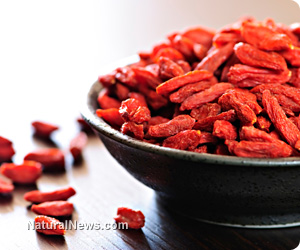
berries(NaturalNews) Goji berries, also called wolfberries, are the fruits of the Lycium barbarum and Lycium chinense plants. Native to southeastern Europe and Asia, these fruits are characterized by their bright orange-red color and raisin-like shape. They have been cultivated in Asia for over 2000 years, and have been nicknamed "red diamonds" due to their unusually high nutritional value. Traditional Chinese medicine was perhaps the first healing system to understand and utilize the berries for medicinal purposes, though their reputation continues to grow in the West, where many researchers regard them as "superfruits."
Health benefits

Antioxidant-rich - According to Jodi Helmer, the author of Goji Berries: Antioxidant Supreme, goji berries are an excellent source of antioxidants such as polyphenols, flavonoids, carotenoids and vitamins A, C and E. In fact, the goji berry contains approximately 500 times more vitamin C per weight than an orange and considerably more beta-carotene than carrots. These findings are reinforced by the goji berries' high Oxygen Radical Absorbance Capacity (ORAC) score of 3,290, which shows that they contain much larger concentrations of antioxidants than most other fruits. Since antioxidants help neutralize the cell-damaging effects of free radicals, eating more antioxidant-rich foods like goji berries can help guard us from degenerative diseases such as rheumatoid arthritis, Alzheimer's disease and most types of cancer.

Prevent vision loss - According to a study published in the 2005 issue of the British Journal of Nutritiongoji berries contain properties that prevent the risk of vision loss. Researchers at Hong Kong Polytechnic University fed 14 healthy volunteers a serving of 15 grams of goji berries daily for 28 days while comparing their blood levels to 13 control volunteers. After 28 days, the volunteers who consumed the fruits experienced significantly raised zeaxanthin levels in the blood (zeaxanthin is an antioxidant present in goji berries that helps preserve eyesight). Therefore, if you're suffering from poor or deteriorating eyesight, consider adding more goji berries to your diet.

Improve male fertility - Goji berries have long been considered a male aphrodisiac in China, and more studies are starting to confirm these allegations. According to a Chinese study published in the July 2006 issue of Life Sciences, for example, rats that were fed goji berries maintained testicular function when subjected to heat. The researchers also found that certain constituents in goji berries regulated the release of sexual hormones, boosted hormone levels and improved the quality and quantity of sperm in male rats.

High in nutrients - Though goji berries are best-known for their antioxidant activity, they also contain an impressive number of vitamins and minerals. According to Paul Gross in his report, The Top 20 Superfruits, a quarter cup of goji berries contains 11 essential vitamins and 22 trace minerals, including 24 percent of our RDI of potassium, 18 percent of our RDI of zinc and a whopping 100 percent of our RDI of iron, copper and riboflavin. They also contain 8 polysaccharides, a primary source of dietary fiber.

Organic goji berries are easily found in health food stores and online, and are usually consumed in dried form. They are also available in capsule form for those who dislike their bitter taste.

Sources for this article include:

http://www.orac-info-portal.de/download/ORAC_R2.pdf

http://www.ncbi.nlm.nih.gov/pubmed/16563441

http://www.ncbi.nlm.nih.gov/pubmed/15705234

http://www.ncbi.nlm.nih.gov/pubmed/17045262

http://www.ncbi.nlm.nih.gov/pubmed/16139464

About the author:
Michael Ravensthorpe is an independent writer whose research interests include nutrition, alternative medicine, and bushcraft. He is the creator of the website, Spiritfoods, through which he promotes the world's healthiest foods.

Learn more: http://www.naturalnews.com/044316_goji_berries_superfoods_antioxidants.html#ixzz2wWJaB043

maandag 17 maart 2014

Spirulina superfood

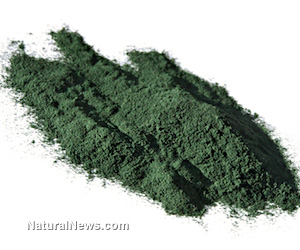
(NaturalNews) We hear so much about superfoods these days. There are hundreds of superfood options on the market, and most of them contain a wide range of minerals, vitamins, enzymes and various other disease fighting components. But there's only one superfood that stands out among the rest, and you should take it every single day to ensure your health: spirulina.

It's a unique blue green algae that is rich in chlorophyll and many other life-giving nutrients.

spirulinaLet's have a close look at various health benefits of spirulina

• Spirulina is rich in various infection-fighting proteins that help in increasing various disease-combating antibodies within your body. It has more than 70 percent protein, which is highest among all foods, and helps in boosting the production of white blood cells that fight and prevent infection.

• In a 2005 study published in the Journal of Medicinal Food, it was found that high doses of spirulina also help in inhibiting many allergic reactions in the body, particularly among those who suffer from allergic rhinitis.

• Spirulina is also effective in the treatment of anemia. In his book Healing with Whole Foods - Asian Traditions and Modern Nutrition, Paul Pitchford explains how spirulina boosts the production of red blood cells, particularly when taken in combination with vitamin B12.

• Rich in chlorophyll and phycocyanin, spirulina is also a powerful blood purifier. Aside from promoting blood cell growth, these two vital nutrients also rejuvenate the existing blood supply. In fact, the structure of chlorophyll is nearly identical to hemoglobin, an important molecule responsible for transporting oxygen to the cells and cleaning the blood.

• Spirulina is also rich in all eight essential amino acids, 10 non-essential amino acids, B complex vitamins, zeaxanthin, the antioxidants beta carotene, the essential fatty acid gamma linolenic acid, beneficial probiotic bacteria, dozens of trace minerals and pathogen-targeting proteins. Spirulina also has unmatched ability to boost your immune system.

• All these nutrients also detoxify the body and cells of various heavy metals and toxins. In fact, spirulina is a good chleating agent that reaches deep into the body tissues and roots out various toxins such as arsenic, mercury, radiation, pesticides, cadmium, environmental carcinogens and synthetic food chemicals.

• In a 1988 study carried out in Japan, it was found that spriulina also lowers cholesterol levels and reduces underlying inflammation due to cholesterol accumulation in the bloodstream.

• All those who are obese can lose weight taking spirulina on daily basis. This is due to its ability to induce weight loss and promote development of lean muscle mass.

Conclusion
If you want to experience all the benefits of spirulina, it's necessary that you consume several grams of this nutrient-dense superfood per day. Interested in buying the best spirulina? For maximum benefits, consider only top brands such as Cyanotech's Nutrex-Hawaii Spirulina Pacifica, because it is cultivated, harvested, and packed in such a way as to avoid any contamination due to toxic microcystins.

Sources for this article include:

http://wellnessmama.com/4738/herb-profile-spirulina/

http://www.naturalnews.com/036101_spirulina_superfood_nutrients.html

http://www.stylecraze.com

Source: http://www.naturalnews.com/044285_spirulina_superfoods_detox.html

NEUROLOGICAL EFFECTS OF GLUTEN

Neurological Effects of Gluten


March 14, 2014 - Whether you have true Celiac Disease, or whether you "only" have lesser gluten antibodies and intolerances, gluten can cause multiple neurological issues. Depression, anxiety, sleep disorders, and a wide variety of Neuromuscular Disorders can have their roots in gluten antibody side effects.


I have seen improvements in ALS, MS, CIPD, Tourette's, seizures, and other complicated illnesses when the client goes strictly grain-free. Testing from Cyrex Labs is helpful in any Neurological or health disorder, as their tests for gluten cross-reactivity will pick up antibodies to dairy, quinoa, rice, oats and many others. (They have several other tests I run on myself and clients too).

In celiac disease, the body's immune system mistakenly attacks a variety of proteins found in wheat, rye, and barley. In its attack on gluten, gliadin, gluteo-morphins and others, the immune system damages the small intestine and produces gut symptoms from mild to severe. Once damaged, the small intestine will not absorb vitamins, minerals, and proteins properly, and the immune system and neurotransmitters will be negatively affected. As a result of this malabsorption, we may find anemia, anorexia, arthritis, behavioral problems, autism spectrum disorders, infertility, pain, depression, migraines, numbness and tingling, bone loss, seizures, and more.

As for depression, a 1998 study confirmed that about one-third of those with celiac disease suffer from depression. Adolescents with celiac disease have a 31% risk of depression, while only 7% of healthy adolescents face this risk. These huge numbers are what propel me to insist on a grain-free diet with my clients. The risks of gluten antibodies attacking any cell of the body are just too great. In particular, low zinc levels have been linked to depression. In addition to keeping the immune system and prostate strong and the memory sharp, zinc plays an important role in the production and use of neurotransmitters. A 2009 study found that zinc supplementation significantly reduced depression scores in people who had not been helped by antidepressants in the past.

Getting off grains is a "Wild Card" in that you never know exactly which benefits you will see first. Sometimes depression lifts; sometimes reflux and gas just stop; sometimes, it's that a healthy appetite replaces the constant need to refuel on starchy carbohydrates. Ultimately, it's all managed by the brain and the intestines. Make improvements there, and the nervous system, immune system, and all the organs and cells will benefit. ( via celiachandbook.com )

Source: http://m.disclose.tv/news/Neurological_Effects_of_Gluten/100957

vrijdag 25 oktober 2013

Hoe suiker de wereld aan het vernietigen is


Een studie van Credit Suisse toont nog maar eens de desastreuze impact van suiker en zoetstoffen op ons dieet. De 'Sugar: Sweet With a Bitter Aftertaste'-video die de Zwitserse bank erbij maakte visualiseert de wereldwijde suikerconsumptie op een toegankelijke manier.

De impact van suiker op onze taille is niet nieuw, maar Credit Suisse toont op een ingenieuze manier hoe 'out of control' onze consumptie geworden is. En dan vooral in de Verenigde Staten, het land waarvoor onlangs de y-as in een grafiek over frisdrankverbruik moest worden aangepast.


http://www.hln.be/hln/nl/33/Fit-Gezond/article/detail/1727928/2013/10/23/Hoe-suiker-de-wereld-aan-het-vernietigen-is.dhtml

woensdag 11 september 2013

Chemical attack was Syria rebel provocation, former hostages say

AFP Photo / Louai Abo Al-Jo

AFP Photo / Louai Abo Al-Jo
Two Europeans who were abducted and held hostage for several months in Syria claim they overheard an exchange between their captors which proves that rebels were behind the recent chemical attack.

In a number of interviews to European news outlets, the former hostages - Belgian teacher Pierre Piccinin and Italian journalist Domenico Quiric - said they overheard an English-language Skype conversation between their captors and other men which suggested it was rebel forces, not the government, that used chemical weapons on Syria’s civilian population in an August 21 attack near Damascus.

“It is a moral duty to say this. The government of Bashar al-Assad did not use sarin gas or other types of gas in the outskirts of Damascus,” Piccinin said during an interview with Belgium's RTL radio station.

Piccinin stressed that while being held captive, he and fellow prisoner Quirico were secluded from the outside world and had no idea that chemical weapons were deployed. But the conversation which both men overheard suggested that the use of the weapons was a strategic move by the opposition, aimed at getting the West to intervene.

"In this conversation, they said that the gas attack on two neighborhoods of Damascus was launched by the rebels as a provocation to lead the West to intervene militarily,”Quirico told Italy’s La Stampa. "We were unaware of everything that was going on during our detention in Syria, and therefore also with the gas attack in Damascus."
While stating that the rebels most likely exaggerated the accident’s death toll, the Italian journalist stressed that he could not vouch whether “the conversation was based on real facts." However, he said that one of the three people in the alleged conversation identified himself as a Free Syrian Army general, La Stampa reported.

Based on what both men have learned, Peccinin told RTL that it would be “insane and suicidal for the West to support these people.”

“It pains me to say it because I've been a fierce supporter of the Free Syrian Army in its rightful fight for democracy since 2012," Piccinin added.


Belgian national Pierre Piccinin (L) disembark from the airplane on September 9, 2013 at Ciampino military airport in Rome (AFP Photo)

Quirico seems to agree with Peccini’s assessment.
“I am extremely surprised that the United States could think about intervening, knowing very well how the Syrian revolution has become international jihadism – in other words Al-Qaeda," Quirico said, as quoted by Italy’s Quotidiano Nazionale.

The 62-year-old La Stampa journalist believes that radical Islamic groups operating in Syria to topple Assad “want to create a caliphate and extend it to the entire Middle East and North Africa.”

In a number of news appearances, both Quirico and Piccinin shared stories of how they were subjected to two mock executions, beaten, and starved during their five-month captivity.

"These have been very tough months. We were beaten on a daily basis, we suffered two mock executions," Quirico told reporters upon his arrival in Rome, AFP reported.


Italian journalist Domenico Quirico disembark from the airplane on September 9, 2013 at Ciampino military airport in Rome (AFP Photo)


"There was sometimes real violence...humiliation, bullying, mock executions...Domenico faced two mock executions, with a revolver," Piccinin told RTL.

Both men were kidnapped in Syria last April by a group of armed men in pickup trucks who were believed to be from Free Syrian Army.

According to Piccinin, the captors soon transferred them over to the Abu Ammar brigade, a rebel group "more bandit than Islamist."

"We were moved around a lot...it was not always the same group that held us, there were very violent groups, very anti-West and some anti-Christian," Piccinin said.

Both men tried to escape twice but their attempts were unsuccessful, prompting the rebel group to punish them for their actions.

The Italian government announced on Sunday that both men had been freed after Rome intensified negotiations with the rebels for the release of the prisoners ahead of an anticipated US strike on Syria.
Another 13 journalists are still believed to be missing in Syria, according to Reporters Without Borders.

Source: http://rt.com/news/chemical-weapons-rebels-captives-632/