One thing Microsoft founder Bill Gates can’t be accused of is sloth. He was already programming at 14, founded Microsoft at age 20 while still a student at Harvard. By 1995 he had been listed by Forbes as the world’s richest man from being the largest shareholder in his Microsoft, a company which his relentless drive built into a de facto monopoly in software systems for personal computers.
In 2006 when most people in such a situation might think of retiring to a quiet Pacific island, Bill Gates decided to devote his energies to his Bill and Melinda Gates Foundation, the world’s largest ‘transparent’ private foundation as it says, with a whopping $34.6 billion endowment and a legal necessity to spend $1.5 billion a year on charitable projects around the world to maintain its tax free charitable status. A gift from friend and business associate, mega-investor Warren Buffett in 2006, of some $30 billion worth of shares in Buffet’s Berkshire Hathaway put the Gates’ foundation into the league where it spends almost the amount of the entire annual budget of the United Nations’ World Health Organization.
So when Bill Gates decides through the Gates Foundation to invest some $30 million of their hard earned money in a project, it is worth looking at.
No project is more interesting at the moment than a curious project in one of the world’s most remote spots, Svalbard. Bill Gates is investing millions in a seed bank on the Barents Sea near the Arctic Ocean, some 1,100 kilometers from the North Pole. Svalbard is a barren piece of rock claimed by Norway and ceded in 1925 by international treaty (see map).
On this God-forsaken island Bill Gates is investing tens of his millions along with the Rockefeller Foundation, Monsanto Corporation, Syngenta Foundation and the Government of Norway, among others, in what is called the ‘doomsday seed bank.’ Officially the project is named the Svalbard Global Seed Vault on the Norwegian island of Spitsbergen, part of the Svalbard island group.
The seed bank is being built inside a mountain on Spitsbergen Island near the small village of Longyearbyen. It’s almost ready for ‘business’ according to their releases. The bank will have dual blast-proof doors with motion sensors, two airlocks, and walls of steel-reinforced concrete one meter thick. It will contain up to three million different varieties of seeds from the entire world, ‘so that crop diversity can be conserved for the future,’ according to the Norwegian government. Seeds will be specially wrapped to exclude moisture. There will be no full-time staff, but the vault’s relative inaccessibility will facilitate monitoring any possible human activity.
Did we miss something here? Their press release stated, ‘so that crop diversity can be conserved for the future.’ What future do the seed bank’s sponsors foresee, that would threaten the global availability of current seeds, almost all of which are already well protected in designated seed banks around the world?
Anytime Bill Gates, the Rockefeller Foundation, Monsanto and Syngenta get together on a common project, it’s worth digging a bit deeper behind the rocks on Spitsbergen. When we do we find some fascinating things.
The first notable point is who is sponsoring the doomsday seed vault. Here joining the Norwegians are, as noted, the Bill & Melinda Gates Foundation; the US agribusiness giant DuPont/Pioneer Hi-Bred, one of the world’s largest owners of patented genetically-modified (GMO) plant seeds and related agrichemicals; Syngenta, the Swiss-based major GMO seed and agrichemicals company through its Syngenta Foundation; the Rockefeller Foundation, the private group who created the “gene revolution with over $100 million of seed money since the 1970’s; CGIAR, the global network created by the Rockefeller Foundation to promote its ideal of genetic purity through agriculture change.
CGIAR and ‘The Project’
As I detailled in the book, Seeds of Destruction1, in 1960 the Rockefeller Foundation, John D. Rockefeller III’s Agriculture Development Council and the Ford Foundation joined forces to create the International Rice Research Institute (IRRI) in Los Baños, the Philippines. By 1971, the Rockefeller Foundation’s IRRI, along with their Mexico-based International Maize and Wheat Improvement Center and two other Rockefeller and Ford Foundation-created international research centers, the IITA for tropical agriculture, Nigeria, and IRRI for rice, Philippines, combined to form a global Consultative Group on International Agriculture Research (CGIAR).
CGIAR was shaped at a series of private conferences held at the Rockefeller Foundation’s conference center in Bellagio, Italy. Key participants at the Bellagio talks were the Rockefeller Foundation’s George Harrar, Ford Foundation’s Forrest Hill, Robert McNamara of the World Bank and Maurice Strong, the Rockefeller family’s international environmental organizer, who, as a Rockefeller Foundation Trustee, organized the UN Earth Summit in Stockholm in 1972. It was part of the foundation’s decades long focus to turn science to the service of eugenics, a hideous version of racial purity, what has been called The Project.
To ensure maximum impact, CGIAR drew in the United Nations’ Food and Agriculture Organization, the UN Development Program and the World Bank. Thus, through a carefully-planned leverage of its initial funds, the Rockefeller Foundation by the beginning of the 1970’s was in a position to shape global agriculture policy. And shape it did.
Financed by generous Rockefeller and Ford Foundation study grants, CGIAR saw to it that leading Third World agriculture scientists and agronomists were brought to the US to ‘master’ the concepts of modern agribusiness production, in order to carry it back to their homeland. In the process they created an invaluable network of influence for US agribusiness promotion in those countries, most especially promotion of the GMO ‘Gene Revolution’ in developing countries, all in the name of science and efficient, free market agriculture.
Genetically engineering a master race?
Now the Svalbard Seed Bank begins to become interesting. But it gets better. ‘The Project’ I referred to is the project of the Rockefeller Foundation and powerful financial interests since the 1920’s to use eugenics, later renamed genetics, to justify creation of a genetically-engineered Master Race. Hitler and the Nazis called it the Ayran Master Race.
The eugenics of Hitler were financed to a major extent by the same Rockefeller Foundation which today is building a doomsday seed vault to preserve samples of every seed on our planet. Now this is getting really intriguing. The same Rockefeller Foundation created the pseudo-science discipline of molecular biology in their relentless pursuit of reducing human life down to the ‘defining gene sequence’ which, they hoped, could then be modified in order to change human traits at will. Hitler’s eugenics scientists, many of whom were quietly brought to the United States after the War to continue their biological eugenics research, laid much of the groundwork of genetic engineering of various life forms, much of it supported openly until well into the Third Reich by Rockefeller Foundation generous grants.2
The same Rockefeller Foundation created the so-called Green Revolution, out of a trip to Mexico in 1946 by Nelson Rockefeller and former New Deal Secretary of Agriculture and founder of the Pioneer Hi-Bred Seed Company, Henry Wallace.
The Green Revolution purported to solve the world hunger problem to a major degree in Mexico, India and other select countries where Rockefeller worked. Rockefeller Foundation agronomist, Norman Borlaug, won a Nobel Peace Prize for his work, hardly something to boast about with the likes of Henry Kissinger sharing the same.
In reality, as it years later emerged, the Green Revolution was a brilliant Rockefeller family scheme to develop a globalized agribusiness which they then could monopolize just as they had done in the world oil industry beginning a half century before. As Henry Kissinger declared in the 1970’s, ‘If you control the oil you control the country; if you control food, you control the population.’
Agribusiness and the Rockefeller Green Revolution went hand-in-hand. They were part of a grand strategy which included Rockefeller Foundation financing of research for the development of genetic engineering of plants and animals a few years later.
John H. Davis had been Assistant Agriculture Secretary under President Dwight Eisenhower in the early 1950’s. He left Washington in 1955 and went to the Harvard Graduate School of Business, an unusual place for an agriculture expert in those days. He had a clear strategy. In 1956, Davis wrote an article in the Harvard Business Review in which he declared that “the only way to solve the so-called farm problem once and for all, and avoid cumbersome government programs, is to progress from agriculture to agribusiness.” He knew precisely what he had in mind, though few others had a clue back then— a revolution in agriculture production that would concentrate control of the food chain in corporate multinational hands, away from the traditional family farmer. 3
A crucial aspect driving the interest of the Rockefeller Foundation and US agribusiness companies was the fact that the Green Revolution was based on proliferation of new hybrid seeds in developing markets. One vital aspect of hybrid seeds was their lack of reproductive capacity. Hybrids had a built in protection against multiplication. Unlike normal open pollinated species whose seed gave yields similar to its parents, the yield of the seed borne by hybrid plants was significantly lower than that of the first generation.
That declining yield characteristic of hybrids meant farmers must normally buy seed every year in order to obtain high yields. Moreover, the lower yield of the second generation eliminated the trade in seed that was often done by seed producers without the breeder’s authorization. It prevented the redistribution of the commercial crop seed by middlemen. If the large multinational seed companies were able to control the parental seed lines in house, no competitor or farmer would be able to produce the hybrid. The global concentration of hybrid seed patents into a handful of giant seed companies, led by DuPont’s Pioneer Hi-Bred and Monsanto’s Dekalb laid the ground for the later GMO seed revolution. 4
In effect, the introduction of modern American agricultural technology, chemical fertilizers and commercial hybrid seeds all made local farmers in developing countries, particularly the larger more established ones, dependent on foreign, mostly US agribusiness and petro-chemical company inputs. It was a first step in what was to be a decades-long, carefully planned process.
Under the Green Revolution Agribusiness was making major inroads into markets which were previously of limited access to US exporters. The trend was later dubbed “market-oriented agriculture.” In reality it was agribusiness-controlled agriculture.
Through the Green Revolution, the Rockefeller Foundation and later Ford Foundation worked hand-in-hand shaping and supporting the foreign policy goals of the United States Agency for International Development (USAID) and of the CIA.
One major effect of the Green Revolution was to depopulate the countryside of peasants who were forced to flee into shantytown slums around the cities in desperate search for work. That was no accident; it was part of the plan to create cheap labor pools for forthcoming US multinational manufactures, the ‘globalization’ of recent years.
When the self-promotion around the Green Revolution died down, the results were quite different from what had been promised. Problems had arisen from indiscriminate use of the new chemical pesticides, often with serious health consequences. The mono-culture cultivation of new hybrid seed varieties decreased soil fertility and yields over time. The first results were impressive: double or even triple yields for some crops such as wheat and later corn in Mexico. That soon faded.
The Green Revolution was typically accompanied by large irrigation projects which often included World Bank loans to construct huge new dams, and flood previously settled areas and fertile farmland in the process. Also, super-wheat produced greater yields by saturating the soil with huge amounts of fertilizer per acre, the fertilizer being the product of nitrates and petroleum, commodities controlled by the Rockefeller-dominated Seven Sisters major oil companies.
Huge quantities of herbicides and pesticides were also used, creating additional markets for the oil and chemical giants. As one analyst put it, in effect, the Green Revolution was merely a chemical revolution. At no point could developing nations pay for the huge amounts of chemical fertilizers and pesticides. They would get the credit courtesy of the World Bank and special loans by Chase Bank and other large New York banks, backed by US Government guarantees.
Applied in a large number of developing countries, those loans went mostly to the large landowners. For the smaller peasants the situation worked differently. Small peasant farmers could not afford the chemical and other modern inputs and had to borrow money.
Initially various government programs tried to provide some loans to farmers so that they could purchase seeds and fertilizers. Farmers who could not participate in this kind of program had to borrow from the private sector. Because of the exorbitant interest rates for informal loans, many small farmers did not even get the benefits of the initial higher yields. After harvest, they had to sell most if not all of their produce to pay off loans and interest. They became dependent on money-lenders and traders and often lost their land. Even with soft loans from government agencies, growing subsistence crops gave way to the production of cash crops.5
Since decades the same interests including the Rockefeller Foundation which backed the initial Green Revolution, have worked to promote a second ‘Gene Revolution’ as Rockefeller Foundation President Gordon Conway termed it several years ago, the spread of industrial agriculture and commercial inputs including GMO patented seeds.
Gates, Rockefeller and a Green Revolution in Africa
With the true background of the 1950’s Rockefeller Foundation Green Revolution clear in mind, it becomes especially curious that the same Rockefeller Foundation along with the Gates Foundation which are now investing millions of dollars in preserving every seed against a possible “doomsday” scenario are also investing millions in a project called The Alliance for a Green Revolution in Africa.
AGRA, as it calls itself, is an alliance again with the same Rockefeller Foundation which created the “Gene Revolution.” A look at the AGRA Board of Directors confirms this.
It includes none other than former UN Secretary General Kofi Annan as chairman. In his acceptance speech in a World Economic Forum event in Cape Town South Africa in June 2007, Kofi Annan stated, ‘I accept this challenge with gratitude to the Rockefeller Foundation, the Bill & Melinda Gates Foundation, and all others who support our African campaign.’
In addition the AGRA board numbers a South African, Strive Masiyiwa who is a Trustee of the Rockefeller Foundation. It includes Sylvia M. Mathews of the Bill & Melinda Gates Foundation; Mamphela Ramphele, former Managing Director of the World Bank (2000 – 2006); Rajiv J. Shah of the Gates Foundation; Nadya K. Shmavonian of the Rockefeller Foundation; Roy Steiner of the Gates Foundation. In addition, an Alliance for AGRA includes Gary Toenniessen the Managing Director of the Rockefeller Foundation and Akinwumi Adesina, Associate Director, Rockefeller Foundation.
To fill out the lineup, the Programmes for AGRA includes Peter Matlon, Managing Director, Rockefeller Foundation; Joseph De Vries, Director of the Programme for Africa’s Seed Systems and Associate Director, Rockefeller foundation; Akinwumi Adesina, Associate Director, Rockefeller Foundation. Like the old failed Green Revolution in India and Mexico, the new Africa Green Revolution is clearly a high priority of the Rockefeller Foundation.
While to date they are keeping a low profile, Monsanto and the major GMO agribusiness giants are believed at the heart of using Kofi Annan’s AGRA to spread their patented GMO seeds across Africa under the deceptive label, ‘bio-technology,’ the new euphemism for genetically engineered patented seeds. To date South Africa is the only African country permitting legal planting of GMO crops. In 2003 Burkina Faso authorized GMO trials. In 2005 Kofi Annan’s Ghana drafted bio-safety legislation and key officials expressed their intentions to pursue research into GMO crops.
Africa is the next target in the US-government campaign to spread GMO worldwide. Its rich soils make it an ideal candidate. Not surprisingly many African governments suspect the worst from the GMO sponsors as a multitude of genetic engineering and biosafety projects have been initiated in Africa, with the aim of introducing GMOs into Africa’s agricultural systems. These include sponsorships offered by the US government to train African scientists in genetic engineering in the US, biosafety projects funded by the United States Agency for International Development (USAID) and the World Bank; GMO research involving African indigenous food crops.
The Rockefeller Foundation has been working for years to promote, largely without success, projects to introduce GMOs into the fields of Africa. They have backed research that supports the applicability of GMO cotton in the Makhathini Flats in South Africa.
Monsanto, who has a strong foothold in South Africa’s seed industry, both GMO and hybrid, has conceived of an ingenious smallholders’ programme known as the ‘Seeds of Hope’ Campaign, which is introducing a green revolution package to small scale poor farmers, followed, of course, by Monsanto’s patented GMO seeds. 6
Syngenta AG of Switzerland, one of the ‘Four Horsemen of the GMO Apocalypse’ is pouring millions of dollars into a new greenhouse facility in Nairobi, to develop GMO insect resistant maize. Syngenta is a part of CGIAR as well.7
Move on to Svalbard
Now is it simply philosophical sloppiness? What leads the Gates and Rockefeller foundations to at one and the same time to back proliferation of patented and soon-to-be Terminator patented seeds across Africa, a process which, as it has in every other place on earth, destroys the plant seed varieties as monoculture industrialized agribusiness is introduced? At the same time they invest tens of millions of dollars to preserve every seed variety known in a bomb-proof doomsday vault near the remote Arctic Circle ‘so that crop diversity can be conserved for the future’ to restate their official release?
It is no accident that the Rockefeller and Gates foundations are teaming up to push a GMO-style Green Revolution in Africa at the same time they are quietly financing the ‘doomsday seed vault’ on Svalbard. The GMO agribusiness giants are up to their ears in the Svalbard project.
Indeed, the entire Svalbard enterprise and the people involved call up the worst catastrophe images of the Michael Crichton bestseller, Andromeda Strain, a sci-fi thriller where a deadly disease of extraterrestrial origin causes rapid, fatal clotting of the blood threatening the entire human species. In Svalbard, the future world’s most secure seed repository will be guarded by the policemen of the GMO Green Revolution–the Rockefeller and Gates Foundations, Syngenta, DuPont and CGIAR.
The Svalbard project will be run by an organization called the Global Crop Diversity Trust (GCDT). Who are they to hold such an awesome trust over the planet’s entire seed varieties? The GCDT was founded by the United Nations Food and Agriculture Organisation (FAO) and Bioversity International (formerly the International Plant Genetic Research Institute), an offshoot of the CGIAR.
The Global Crop Diversity Trust is based in Rome. Its Board is chaired by Margaret Catley-Carlson a Canadian also on the advisory board of Group Suez Lyonnaise des Eaux, one of the world’s largest private water companies. Catley-Carlson was also president until 1998 of the New York-based Population Council, John D. Rockefeller’s population reduction organization, set up in 1952 to advance the Rockefeller family’s eugenics program under the cover of promoting “family planning,” birth control devices, sterilization and “population control” in developing countries.
Other GCDT board members include former Bank of America executive presently head of the Hollywood DreamWorks Animation, Lewis Coleman. Coleman is also the lead Board Director of Northrup Grumman Corporation, one of America’s largest military industry Pentagon contractors.
Jorio Dauster (Brazil) is also Board Chairman of Brasil Ecodiesel. He is a former Ambassador of Brazil to the European Union, and Chief Negotiator of Brazil’s foreign debt for the Ministry of Finance. Dauster has also served as President of the Brazilian Coffee Institute and as Coordinator of the Project for the Modernization of Brazil’s Patent System, which involves legalizing patents on seeds which are genetically modified, something until recently forbidden by Brazil’s laws.
Cary Fowler is the Trust’s Executive Director. Fowler was Professor and Director of Research in the Department for International Environment & Development Studies at the Norwegian University of Life Sciences. He was also a Senior Advisor to the Director General of Bioversity International. There he represented the Future Harvest Centres of the Consultative Group on International Agricultural Research (CGIAR) in negotiations on the International Treaty on Plant Genetic Resources. In the 1990s, he headed the International Program on Plant Genetic Resources at the FAO. He drafted and supervised negotiations of FAO’s Global Plan of Action for Plant Genetic Resources, adopted by 150 countries in 1996. He is a past-member of the National Plant Genetic Resources Board of the US and the Board of Trustees of the International Maize and Wheat Improvement Center in Mexico, another Rockefeller Foundation and CGIAR project.
GCDT board member Dr. Mangala Rai of India is the Secretary of India’s Department of Agricultural Research and Education (DARE), and Director General of the Indian Council for Agricultural Research (ICAR). He is also a Board Member of the Rockefeller Foundation’s International Rice Research Institute (IRRI), which promoted the world’s first major GMO experiment, the much-hyped ‘Golden Rice’ which proved a failure. Rai has served as Board Member for CIMMYT (International Maize and Wheat Improvement Center), and a Member of the Executive Council of the CGIAR.
Global Crop Diversity Trust Donors or financial angels include as well, in the words of the Humphrey Bogart Casablanca classic, ‘all the usual suspects.’ As well as the Rockefeller and Gates Foundations, the Donors include GMO giants DuPont-Pioneer Hi-Bred, Syngenta of Basle Switzerland, CGIAR and the State Department’s energetically pro-GMO agency for development aid, USAID. Indeed it seems we have the GMO and population reduction foxes guarding the hen-house of mankind, the global seed diversity store in Svalbard. 8
Why now Svalbard?
We can legitimately ask why Bill Gates and the Rockefeller Foundation along with the major genetic engineering agribusiness giants such as DuPont and Syngenta, along with CGIAR are building the Doomsday Seed Vault in the Arctic.
Who uses such a seed bank in the first place? Plant breeders and researchers are the major users of gene banks. Today’s largest plant breeders are Monsanto, DuPont, Syngenta and Dow Chemical, the global plant-patenting GMO giants. Since early in 2007 Monsanto holds world patent rights together with the United States Government for plant so-called ‘Terminator’ or Genetic Use Restriction Technology (GURT). Terminator is an ominous technology by which a patented commercial seed commits ‘suicide’ after one harvest. Control by private seed companies is total. Such control and power over the food chain has never before in the history of mankind existed.
This clever genetically engineered terminator trait forces farmers to return every year to Monsanto or other GMO seed suppliers to get new seeds for rice, soybeans, corn, wheat whatever major crops they need to feed their population. If broadly introduced around the world, it could within perhaps a decade or so make the world’s majority of food producers new feudal serfs in bondage to three or four giant seed companies such as Monsanto or DuPont or Dow Chemical.
That, of course, could also open the door to have those private companies, perhaps under orders from their host government, Washington, deny seeds to one or another developing country whose politics happened to go against Washington’s. Those who say ‘It can’t happen here’ should look more closely at current global events. The mere existence of that concentration of power in three or four private US-based agribusiness giants is grounds for legally banning all GMO crops even were their harvest gains real, which they manifestly are not.
These private companies, Monsanto, DuPont, Dow Chemical hardly have an unsullied record in terms of stewardship of human life. They developed and proliferated such innovations as dioxin, PCBs, Agent Orange. They covered up for decades clear evidence of carcinogenic and other severe human health consequences of use of the toxic chemicals. They have buried serious scientific reports that the world’s most widespread herbicide, glyphosate, the essential ingredient in Monsanto’s Roundup herbicide that is tied to purchase of most Monsanto genetically engineered seeds, is toxic when it seeps into drinking water.9 Denmark banned glyphosate in 2003 when it confirmed it has contaminated the country’s groundwater.10
The diversity stored in seed gene banks is the raw material for plant breeding and for a great deal of basic biological research. Several hundred thousand samples are distributed annually for such purposes. The UN’s FAO lists some 1400 seed banks around the world, the largest being held by the United States Government. Other large banks are held by China, Russia, Japan, India, South Korea, Germany and Canada in descending order of size. In addition, CGIAR operates a chain of seed banks in select centers around the world.
CGIAR, set up in 1972 by the Rockefeller Foundation and Ford Foundation to spread their Green Revolution agribusiness model, controls most of the private seed banks from the Philippines to Syria to Kenya. In all these present seed banks hold more than six and a half million seed varieties, almost two million of which are ‘distinct.’ Svalbard’s Doomsday Vault will have a capacity to house four and a half million different seeds.
GMO as a weapon of biowarfare?
Now we come to the heart of the danger and the potential for misuse inherent in the Svalbard project of Bill Gates and the Rockefeller foundation. Can the development of patented seeds for most of the world’s major sustenance crops such as rice, corn, wheat, and feed grains such as soybeans ultimately be used in a horrible form of biological warfare?
The explicit aim of the eugenics lobby funded by wealthy elite families such as Rockefeller, Carnegie, Harriman and others since the 1920’s, has embodied what they termed ‘negative eugenics,’ the systematic killing off of undesired bloodlines. Margaret Sanger, a rapid eugenicist, the founder of Planned Parenthood International and an intimate of the Rockefeller family, created something called The Negro Project in 1939, based in Harlem, which as she confided in a letter to a friend, was all about the fact that, as she put it, ‘we want to exterminate the Negro population.’ 11
A small California biotech company, Epicyte, in 2001 announced the development of genetically engineered corn which contained a spermicide which made the semen of men who ate it sterile. At the time Epicyte had a joint venture agreement to spread its technology with DuPont and Syngenta, two of the sponsors of the Svalbard Doomsday Seed Vault. Epicyte was since acquired by a North Carolina biotech company. Astonishing to learn was that Epicyte had developed its spermicidal GMO corn with research funds from the US Department of Agriculture, the same USDA which, despite worldwide opposition, continued to finance the development of Terminator technology, now held by Monsanto.
In the 1990’s the UN’s World Health Organization launched a campaign to vaccinate millions of women in Nicaragua, Mexico and the Philippines between the ages of 15 and 45, allegedly against Tentanus, a sickness arising from such things as stepping on a rusty nail. The vaccine was not given to men or boys, despite the fact they are presumably equally liable to step on rusty nails as women.
Because of that curious anomaly, Comite Pro Vida de Mexico, a Roman Catholic lay organization became suspicious and had vaccine samples tested. The tests revealed that the Tetanus vaccine being spread by the WHO only to women of child-bearing age contained human Chorionic Gonadotrophin or hCG, a natural hormone which when combined with a tetanus toxoid carrier stimulated antibodies rendering a woman incapable of maintaining a pregnancy. None of the women vaccinated were told.
It later came out that the Rockefeller Foundation along with the Rockefeller’s Population Council, the World Bank (home to CGIAR), and the United States’ National Institutes of Health had been involved in a 20-year-long project begun in 1972 to develop the concealed abortion vaccine with a tetanus carrier for WHO. In addition, the Government of Norway, the host to the Svalbard Doomsday Seed Vault, donated $41 million to develop the special abortive Tetanus vaccine. 12
Is it a coincidence that these same organizations, from Norway to the Rockefeller Foundation to the World Bank are also involved in the Svalbard seed bank project? According to Prof. Francis Boyle who drafted the Biological Weapons Anti-Terrorism Act of 1989 enacted by the US Congress, the Pentagon is ‘now gearing up to fight and win biological warfare’ as part of two Bush national strategy directives adopted, he notes, ‘without public knowledge and review’ in 2002. Boyle adds that in 2001-2004 alone the US Federal Government spent $14.5 billion for civilian bio-warfare-related work, a staggering sum.
Rutgers University biologist Richard Ebright estimates that over 300 scientific institutions and some 12,000 individuals in the USA today have access to pathogens suitable for biowarfare. Alone there are 497 US Government NIH grants for research into infectious diseases with biowarfare potential. Of course this is being justified under the rubric of defending against possible terror attack as so much is today.
Many of the US Government dollars spent on biowarfare research involve genetic engineering. MIT biology professor Jonathan King says that the ‘growing bio-terror programs represent a significant emerging danger to our own population.’ King adds, ‘while such programs are always called defensive, with biological weapons, defensive and offensive programs overlap almost completely.’ 13
Time will tell whether, God Forbid, the Svalbard Doomsday Seed Bank of Bill Gates and the Rockefeller Foundation is part of another Final Solution, this involving the extinction of the Late, Great Planet Earth.
Notes
1 F. William Engdahl, Seeds of Destruction, Montreal, (Global Research, 2007).
2 Ibid, pp.72-90.
3 John H. Davis, Harvard Business Review, 1956, cited in Geoffrey Lawrence, Agribusiness, Capitalism and the Countryside, Pluto Press, Sydney, 1987. See also Harvard Business School, The Evolution of an Industry and a Seminar: Agribusiness Seminar,
http://www.exed.hbs.edu/programs/agb/seminar.html.
4 Engdahl, op cit., p. 130.
5 Ibid. P. 123-30.
6 Myriam Mayet, The New Green Revolution in Africa: Trojan Horse for GMOs?, May, 2007, African Centre for Biosafety, www.biosafetyafrica.net.
7 ETC Group, Green Revolution 2.0 for Africa?, Communique Issue #94, March/April 2007.
8 Global Crop Diversity Trust website, in
http://www.croptrust.org/main/donors.php.
9 Engdahl, op. cit., pp.227-236.
10 Anders Legarth Smith, Denmark Bans Glyphosates, the Active Ingredient in Roundup, Politiken, September 15, 2003, in
organic.com.au/news/2003.09.15.
11 Tanya L. Green, The Negro Project: Margaret Sanger’s Genocide Project for Black American’s, in
www.blackgenocide.org/negro.html.
12 Engdahl, op. cit., pp. 273-275; J.A. Miller, Are New Vaccines Laced With Birth-Control Drugs?, HLI Reports, Human Life International, Gaithersburg, Maryland; June/July 1995, Volume 13, Number 8.
13 Sherwood Ross, Bush Developing Illegal Bioterror Weapons for Offensive Use,’ December 20, 2006, in www.truthout.org.
Source: The Article Was Originally Published in 2007:
GlobalResearch


 You don’t have to look much farther than the boardroom to see how deeply entrenched its ties to the rest of the food industry are: Janice L. Fields, a former president of McDonald’s USA, and C. Steven McMillan, a former CEO of Sara Lee Corporation, both sit on the board of directors. Other board members have ties to Procter & Gamble, Lockheed Martin, and Microsoft. As a report from Food and Water Watch pointed out last year, the board’s connections—past and present—to big food and big business has helped build a friendly audience, in business and in government, for its products:
 Het in stand houden van een grote diversiteit gezonde, voedselgewassen ligt aan de basis van een gezonde, veilige en diverse voedselvoorziening voor een bevolking.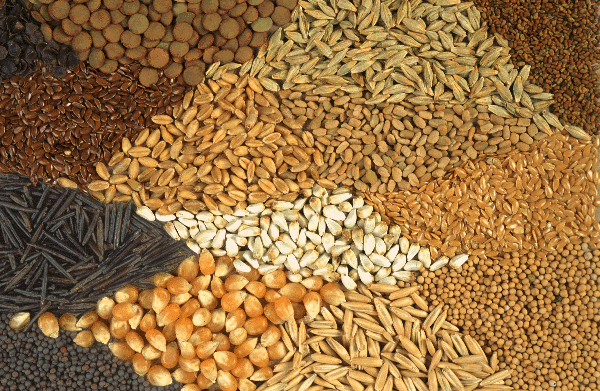

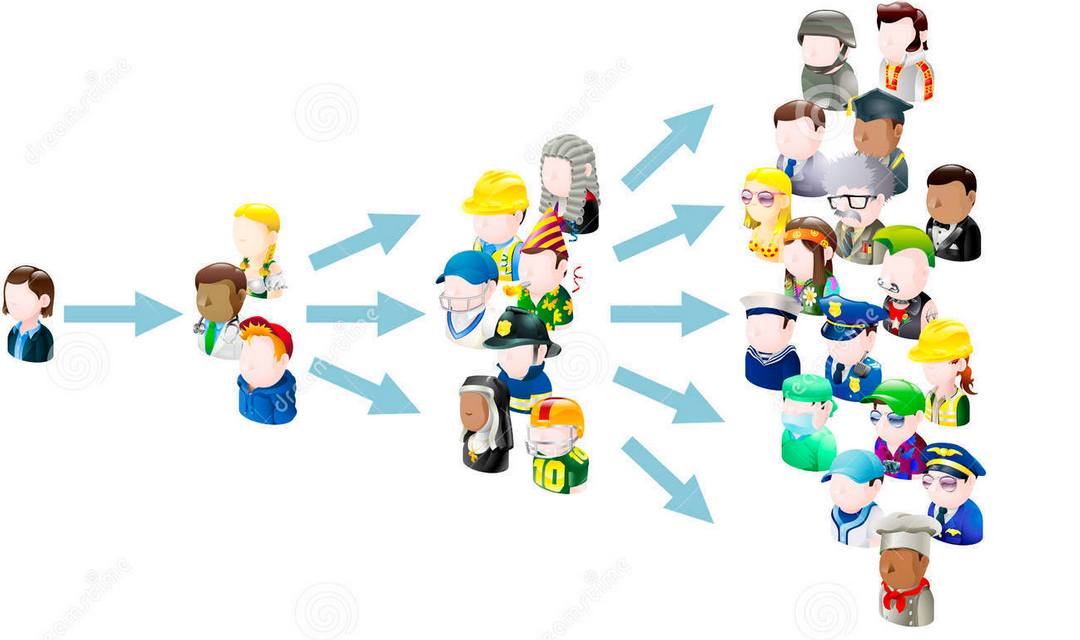
 Hoewel deze strategie als bedrijfsmodel prima werkt is het letterlijk levensgevaarlijk voor de biodiversiteit en alle mensen die daarvan afhankelijk zijn voor hun directe voortbestaan.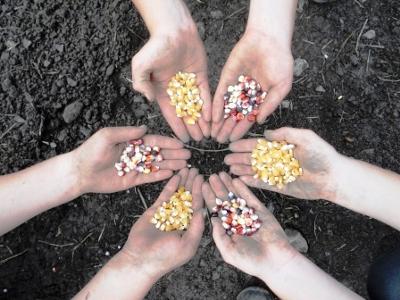
 Het heeft er alle schijn van dat het gentech bedrijf Monsanto in 2011 het grootste huurlingenleger ter wereld heeft gekocht. Het gaat om “Academi“, het voormalige “Blackwater” dat later werd omgedoopt in “XE Services”. In 2009 werd de naam Blackwater veranderd in “XE services” vanwege het beestachtige optreden van hun huursoldaten in Irak, waaronder massamoorden op burgers. Meer recent is het bedrijf omgedoopt in “Academi”. De grootste opdrachtgever van dit huurlingenbedrijf is het Amerikaanse “Department of State” (Ministerie van Buitenlandse Zaken).
 Het wekt geen verwondering dat een bedrijf dat actief is in de “wetenschap van de dood” zoals Monsanto (Agent Orange, pesticiden, PCB’s, hormonen en genetisch gemanipuleerde zaden) kan worden geassocieerd met andere misdadige gezelschappen. Dat het feitelijk misdadigers zijn die lid zijn van een criminele organisatie blijkt uit het Handvest van de Verenigde Naties omdat private militante huurlingen organisaties die opereren in eigen- of andere landen, door de VN verboden zijn.
 Monsanto is samen met de regering Obama in het diepste geheim bezig met het oprichten van een handelspact die geheel buiten de wet om landen moet afdwingen om de etikettering van genetisch gemanipuleerde producten te verbieden. Het handelspact heeft de naam “Trans Pacific Partnership” (TPP). Details van het TPP worden zo geheim gehouden dat het de leden van het Congres niet is toegestaan om ze openbaar te maken. of zelfs maar te bespreken. Alles wat er bekend is over het TPP is afkomstig van lekken.
 Gisteravond ging bij mij de telefoon. Ron Fonteine van Leefbewust.com had ontdekt dat er deze week een nieuwe zoetstof in de EU is goedgekeurd: Advantame. In Nederland zal men op de etiketten vermoedelijk over Advantaam gaan spreken. Net nu de bouwvak is begonnen en heel Nederland in het buitenland vakantie viert, proberen de machthebbers ongemerkt deze nieuwe super-aspartaam erdoorheen te drukken. Ooit was aspartaam het antwoord op obesitas, maar we zijn dikker dan ooit.
 In de jongste aanval van de Amerikaanse overheid op haar burgers heeft het agentschap van de USDA (United States Department of Agriculture) een verbod uitgevaardigd aan Rosie, een ijverig 4-jarig meisje uit Zuid-Dakota, om op een ongebruikt stukje grond naast haar gesubsidieerde wooneenheid, groente te verbouwen.
 Exploiting an egregious loophole in European patent law, Monsanto and others have been feverishly filing for patents on all sorts of natural crops, presumably in response to widespread resistance by members of the European public to its GMO offerings. Most recently, EPO granted Monsanto a patent on conventionally-bred broccoli, which includes not only broccoli seeds but also the "severed broccoli head" and the "plurality of broccoli plants ... grown in a field of broccoli" - in other words, broccoli in all of its natural forms.
